Family-Friendly Beaches Near Tavira: Which One, and How to Get There
Updated September 10, 2026 · 7 min read
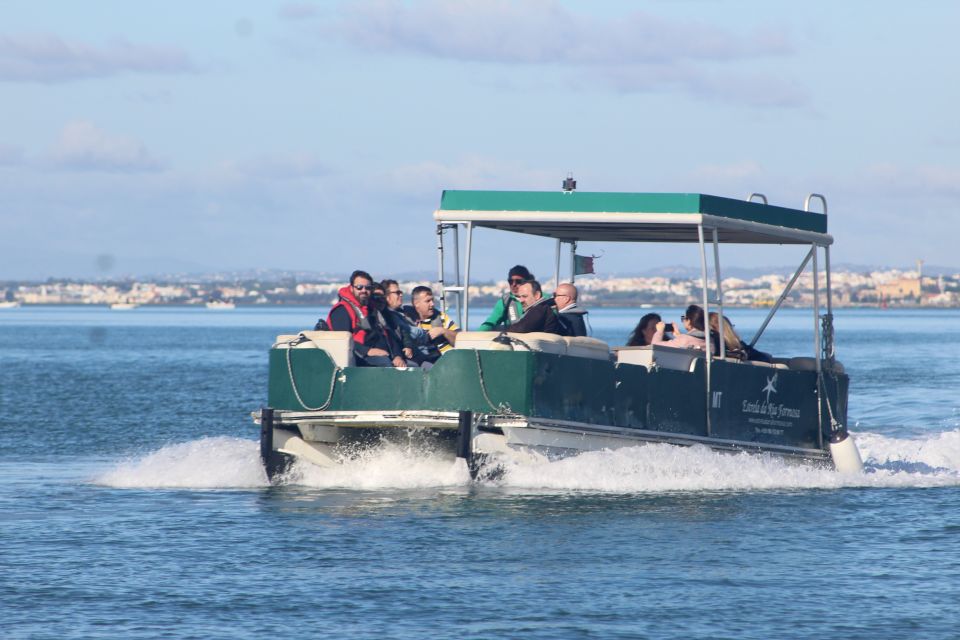
Tavira has no beach of its own. The town sits on a river, the sea lies behind a lagoon, and sandbanks lie in between. Every beach day here starts with a decision you won’t face in other coastal towns: how you get there.
There are three ways. By ferry, on foot across a causeway, or by car to the east, where the coast meets the mainland again.
Praia do Barril – the only one without a boat
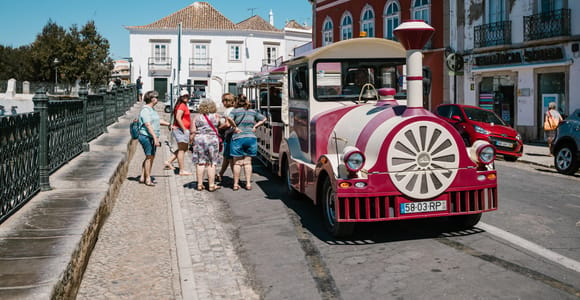
From Pedras d’el Rei, a causeway crosses the water, followed by a flat kilometre across the salt marsh. On foot that’s a good quarter of an hour, or take the narrow-gauge train for one to two euros each way.
For families, Barril is the most practical option: the old tuna fishermen’s houses stand right on the beach, now restaurants and shops, with toilets and showers. Behind the dune lies the anchor graveyard, with over a hundred old anchors in rows.
The drawback is the same as everywhere here: shade only comes from a rented parasol, and on hot days those are gone by mid-morning.
Suits: any age, and it’s the only beach that also works for a day without a timetable in mind.
Ilha de Tavira – the busiest
The ferry leaves from Quatro Águas, the crossing takes under ten minutes, and in summer it runs roughly every half hour. Toddlers up to three travel free.
The stretch there is the best-equipped in the area: a bar, toilets, a first-aid post and lifeguards during the bathing season. That’s exactly why it’s also the busiest.
The tricky part is the queue at the jetty. In August, you’ll stand there in the early afternoon sun, with no shade and no alternative. Going in the morning spares you both.
Suits: families who want facilities and can cope with crowds.
Terra Estreita – the same island, half as crowded
A second boat crosses from Santa Luzia, and the beach beyond it is the quieter neighbour of Ilha de Tavira. Less bustle, less choice for food, the same kind of sand.
Anyone who has ever waited for an overcrowded ferry with tired children knows what this alternative is worth.
Suits: toddlers, and anyone who values peace and quiet over amenities.
Praia de Cabanas – the shortest crossing
In Cabanas, a small boat crosses the narrow channel, and the beach begins almost right away. The crossing takes minutes, making it the easiest for families with babies: if something doesn’t work out, you’re back quickly.
Cabanas itself has a waterfront promenade lined with restaurants – for the afternoon after the beach, that’s more than the other access points offer.
Suits: babies and toddlers, and anyone who doesn’t want to plan around half a day.
Without a ferry: the east
From around Cacela Velha, the lagoon ends and the beaches sit directly on the mainland again. You drive there, park, and walk over the dune – no boat, no timetable.
Manta Rota is the simplest: a short walk from the car park, a shallow entry, and lifeguarded in season. Praia Verde owes its name to the pine forest behind the dune – the only spot on this coast where real shade grows for the midday break, though up on the dune, not by the water. Altura lies in between and has the most restaurants within walking distance.
Suits: days with a pushchair, unplanned afternoons, and everything else the Eastern Algarve between Tavira and the border has to offer – more on that in What to See in the Eastern Algarve.
Fuseta – for the very youngest
Twenty minutes west by car lies Fuseta, and it has something no other spot here does: a bathing area on the lagoon side. The water sits calm there and warms up quickly on the incoming tide, with no waves at all.
For a child who’s just learning to walk, this is the safest entry point in the whole Eastern Algarve. For a child who wants waves, it’s boring.
What all these beaches have in common
No natural shade. Nothing grows on the sandbanks that casts shade. Your own parasol isn’t an accessory here – it’s equipment.
Tides that change everything. At low tide, wide sandbanks and knee-deep, warm tidal channels appear – the best toy this coast has to offer. At high tide, the same beach is half as wide.
Currents in the channels. Navigation channels run between the sandbanks, and you can’t see them from above. What decides where children can wade and where they can’t isn’t the depth of the water, but whether there’s a pull.
Water temperature. In late summer, the open water sits at around 21 degrees – pleasant for northern Europeans, cool for those used to the Mediterranean. In the tidal channels, it’s noticeably warmer.
Which beach for which age
| Baby | Cabanas (short crossing), Fuseta (lagoon side) |
| Toddler | Barril at low tide, Terra Estreita |
| Primary-school child | Barril, Ilha de Tavira, tidal channels with a snorkel mask |
| Teenager | Ilha de Tavira, Praia Verde |
| Pushchair | Manta Rota, Praia Verde, Altura – the ones without a boat |
The most important time of day
The last ferry. It’s posted at the jetty, it changes with the season, and no one will ask whether you’ve read it. Miss it, and you’re stuck on an island with no bridge.
Photograph the timetable on the way there. It’s the advice you hear most often here – and follow least.
Everything else that goes into a beach day – heat, mealtimes, how long children can last – is covered by age in Tavira with a Baby, Tavira with a Toddler and Tavira with School-Age Kids; the overview is in Tavira with Kids. What the town itself has to offer is covered in What to See in Tavira. Bookable options by type: Ria Formosa Boat Tours, Salt Pans and Flamingos and Things to Do in Tavira.