Eating in Tavira: why the kitchen here is not the Albufeira kitchen
Updated September 17, 2026 · 6 min read
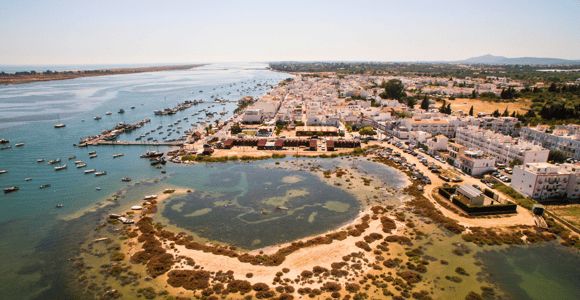
The difference between eating in Tavira and eating in Albufeira is not a question of quality, and anyone who tells you otherwise is selling something. It is a question of what is landed nearby, who the kitchen has been cooking for over the past fifty years, and what the town has formally committed itself to.
That last part is unusual enough to state plainly. When the Mediterranean Diet was inscribed on UNESCO’s Intangible Cultural Heritage list on 4 December 2013 — a transnational nomination by Portugal, Cyprus, Croatia, Greece, Spain, Italy and Morocco — Tavira was chosen as Portugal’s representative community. The municipality has run a safeguarding programme ever since, with a fair, recorded crafts, routes and publications.
What the town’s own list says you should eat
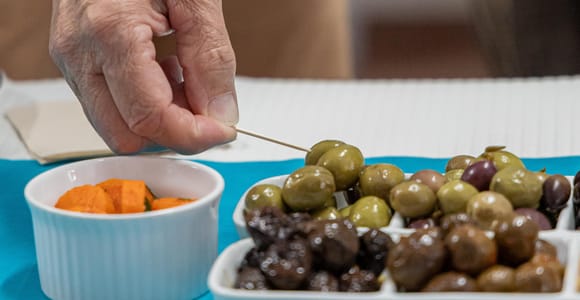
Tavira’s tourist board names its specialities without much ceremony: tuna, octopus, razor clams, anchovy and squid from the water; game, cured sausage, fresh cheese, almonds, carob and figs from the land; and two spirits, medronho and fig aguardente.
Read that list again and notice what is missing. There is no signature dish, no single plate the town has built an identity around. The identity is the ingredients and the season, which is exactly what the Mediterranean Diet listing is about and exactly what makes a menu here harder to skim than one designed for a week’s holiday.
The practical consequence: ask what came in today rather than ordering from the photograph. In a town whose restaurants sit a few hundred metres from a working lagoon and a working fishing fleet, that question has a real answer more often than it does elsewhere.
Tuna is history here, not a menu category
Between May and September, for centuries, Tavira’s waters were fished by almadravas — large fixed tuna traps. The last of the settlements built around them, the Arraial Ferreira Neto, went up in April 1945 with houses, a canteen, a school and a church, and at its height held more than four hundred people. Its final tuna campaign was in 1968, and the operation wound up in the early 1970s.
The catch went by sailing boat to the canning factory at Vila Real de Santo António, and the canning trade it fed is a large part of why this stretch of coast industrialised when it did. None of that survives as an industry. It survives on menus, in tuna preparations that a visitor from a resort town may not recognise, and in the local insistence that tuna is a serious fish rather than a sandwich filling.
If that history interests you, the Roman bridge and castle articles cover the older layers; the tuna layer is recent enough that people in Tavira still have relatives who worked it.
Santa Luzia and the octopus pots
A short way west along the lagoon, Santa Luzia calls itself the Capital do Polvo. The claim is not decoration: the village once landed a very large share of the octopus eaten in Portugal, and the fleet still works with alcatruzes — unglazed clay pots, a design going back to antiquity, baited and left on the seabed overnight for octopus to shelter in.
Octopus reaches the table there in more forms than most visitors know exist: rice, grilled, roasted with sweet potato, in cream, dried, and as roe. Ordering “octopus” in Santa Luzia is like ordering “beef” — the question is which preparation.
Our Santa Luzia village guide covers the visit itself, and the octopus route boat trip covers the excursion that borrows the name. Neither is a cooking lesson, and neither should be booked on the assumption that a seafood feast is included.
The lagoon supplies the shellfish, with conditions
Clams, razor clams and other bivalves from the Ria Formosa are the other pillar, and they come with a qualification that resort menus rarely mention: harvesting areas open and close according to official monitoring, and what is available shifts through the year. We set out how that works in the Ria Formosa shellfish guide.
This is the clearest structural difference from a high-volume resort kitchen. A restaurant serving thousands of covers a week needs supply it can count on, which in practice means a wider and less local sourcing net. A restaurant serving a town of this size can afford to let the lagoon decide.
Neither model is dishonest. But it does mean that “fresh, local” carries more information on a Tavira menu than it does on a menu written for a strip of hotels, and that a closed harvesting area is a reason a dish is off rather than an excuse.
Cataplana, and what it actually is
A cataplana is a hinged copper pan, not a recipe. What goes in it varies by house and by season — shellfish, fish, pork and shellfish together. It is a slow, steamed, shared dish, and it is generally ordered for two.
Expect it to take time, expect to be asked for a minimum of two people, and do not expect every cataplana to taste the same. This is one of the dishes where asking the kitchen what is in theirs today is not fussiness.
What to skip, honestly
Tavira does not do resort catering well, because it barely does it. If your table includes someone who wants a familiar international menu at ten in the evening in February, this is a harder town than Albufeira, and pretending otherwise would be unhelpful. Our eating out with children guide covers the practical side of that.
Nor is the town’s food scene cheap simply because it is small. The cost of a week here with children works through what a family actually spends. For the tours that put food at the centre rather than at the end, the food and wine tours page is the place to start.