Clams and shellfish in Ria Formosa: origin, season and what tours show
Updated September 12, 2026 · 6 min read
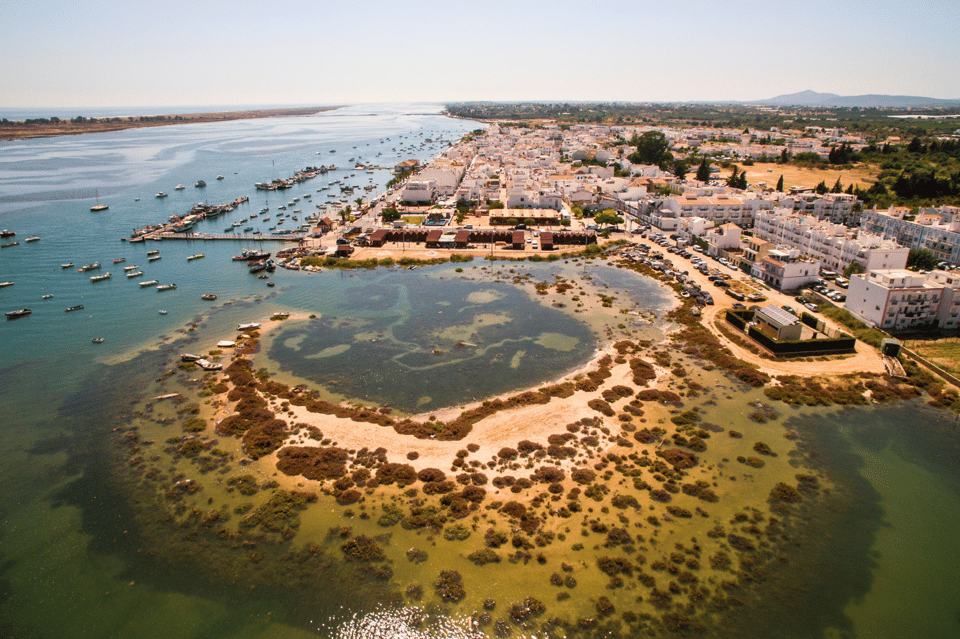
For shellfish in the Ria Formosa, the most useful question is not simply when the season starts. Ask which species you are being offered, where it comes from and what the activity actually includes. A restaurant dish, a market purchase and a boat passing a growing area are three different ways to encounter the same food landscape.
This guide is for choosing a visit or a meal from a Tavira base. It is not a harvesting guide and does not turn a visible shellfish bed into an invitation to collect dinner. We have not verified a single current season calendar that applies to every species and production area in the lagoon.
Start with the name on the menu
Amêijoas are clams; mexilhões are mussels; ostras are oysters. They are not interchangeable names for one local speciality. If an English menu calls everything shellfish, ask for the Portuguese name so you can compare the same product between a market counter and a restaurant.
The FORMOSA producers’ cooperative entry lists amêijoa-boa. That is a more specific starting point for a conversation than asking only for local seafood. It does not mean every clam offered in Tavira comes from that cooperative.
Keep preparation separate from provenance. A dish can use a local recipe without every ingredient being locally produced. Conversely, locally produced clams can appear in different preparations. Ask both questions if your reason for ordering is to understand the Ria Formosa rather than simply choose something you like eating.
The lagoon is also a place of production
An IPMA study on Ria Formosa aquaculture identifies amêijoa-boa as predominant in the lagoon’s growing beds. A bed is part of a working food system, not merely a feature to photograph from a passing boat.
Tavira also hosts IPMA’s experimental mollusc-culture station at Vale de Caranguejo. Its existence explains a local research connection; it does not establish public opening hours or a drop-in visitor attraction. Do not plan a casual visit to a research facility without a confirmed arrangement.
When a guide points out cultivation, ask what can actually be identified from the boat. Seeing equipment or an exposed area is different from meeting a producer and learning how the product reaches a seller. A useful excursion description should distinguish those experiences.
Why we do not publish a universal shellfish season
IPMA publishes harvesting permissions and restrictions by production area and species. Check the current official notice for the relevant place and product rather than treating a month on a travel blog as approval to harvest.
That changing information is one reason a simple summer-versus-winter answer is inadequate for planning a specialist visit. Ask an operator whether the activity is observation, producer interpretation or a tasting, and what changes if the intended product is unavailable. We make no claim about today’s permission status for a particular Tavira bed.
A restaurant’s availability is another question again. Ask what is being served on that day and where it came from. Absence of one dish does not establish that all Ria Formosa shellfish are unavailable, just as seeing a dish on a menu does not establish local origin.
What a Tavira boat trip does not automatically include
The local fishing-villages trip through Santa Luzia and Cabanas, tour 1162929, is listed at €40 per person for three hours, with 153 reviews and a 4.8 rating in our 12 September 2026 catalogue snapshot. Its description concerns fishing heritage and villages. It does not confirm a shellfish-farm visit or tasting.
The Octopus Route from Cabanas, 221925, is listed at €35 per person for four hours. Its lunch stop is centred on Santa Luzia, and octopus is a different topic from clams or mussels. Do not buy it as a bivalve-production excursion merely because both activities involve the lagoon and seafood.
Our wider feed also includes a Faro catamaran itinerary, 103007, whose description mentions observing oyster farming. It departs from Faro, not Tavira. We mention that distinction to help identify the right product type, not to promise a Tavira pickup or a producer-led tasting. Check the actual booking conditions if that is the experience you want.
Questions that turn a vague tasting into a clear booking
Ask which product you taste, whether it is included and where the tasting takes place. Then ask how much of the outing is devoted to the producer or food explanation. An island lunch opportunity should not be priced in your mind as a guided tasting unless the operator explicitly says so.
For anyone with dietary requirements, explain those before paying and ask what alternative is possible. We do not provide medical advice or assurance about individual suitability. A general food-tour label cannot answer a personal dietary question.
If you only want to try a dish, a meal may be simpler than a specialist excursion. Compare food and wine activities when explanation and access are worth paying for; compare boat trips when the lagoon journey itself matters.
Buying at a market needs its own plan
At the counter, establish the species, origin and price unit before comparing costs. Ask the seller about transport and storage, and organise a direct return to your kitchen when the purchase requires it. We have not verified current market prices and do not invent a typical kilo price.
With children, looking at a counter and choosing a familiar meal afterwards may work better than booking a tasting nobody wants. There is no need to make eating shellfish the measure of a successful visit. Choose the experience for the questions your group actually wants answered.