Tavira in a Wheelchair: What We Know, What We Don't
Updated September 10, 2026 · 7 min read
Let’s start with what we won’t be writing.
We won’t be writing that a particular boat in Tavira is wheelchair accessible. We went through the 22 short descriptions shown here (10 September 2026), in all six languages, and not one of them says a word about wheelchairs, ramps, step heights or door widths. Where nothing is stated, we know nothing – and a sentence from us that suggested otherwise would leave someone standing on the jetty, unable to come along.
What we can provide is the surface underfoot. That doesn’t change from operator to operator, and in Tavira it’s the real issue.
The Town: A Flat Riverside and a Cobbled Half
For anyone using a wheelchair, Tavira splits into two very different areas.
The riverside streets on both banks of the Gilão are the good part. They’re flat, wide enough, run with almost no gradient, and between them lies the Ponte Antiga – the seven-arched bridge that no car has crossed since the 1989 flood. A flat, car-free link through the middle of town is something most old towns on this coast don’t have.
The lanes behind them are the difficult part. Traditional Portuguese cobbles – hand-laid limestone setts – are attractive, uneven and slippery when wet. Dropped kerbs exist, but not everywhere, and the lanes climb towards the castle. Anyone self-propelling gets further along the riverside than in the old town; anyone being pushed has more choice.
As for the castle itself: the way up is a climb over cobbles, and steps lead onto the top of the wall – the reason for going up in the first place. What there is to see from up there is covered in What to See in Tavira.
The riverside market hall sits at ground level along the waterfront path. At the water tower with the camera obscura and at the Centro Ciência Viva, we deliberately say nothing about lifts or steps – only a phone call to them can answer that. Both are small enough that a call the day before settles the matter.
The Step Everything Hinges On
You reach Ilha de Tavira from Quatro Águas, a good two kilometres outside town, by small boat. And that’s where the barrier no brochure mentions is found:
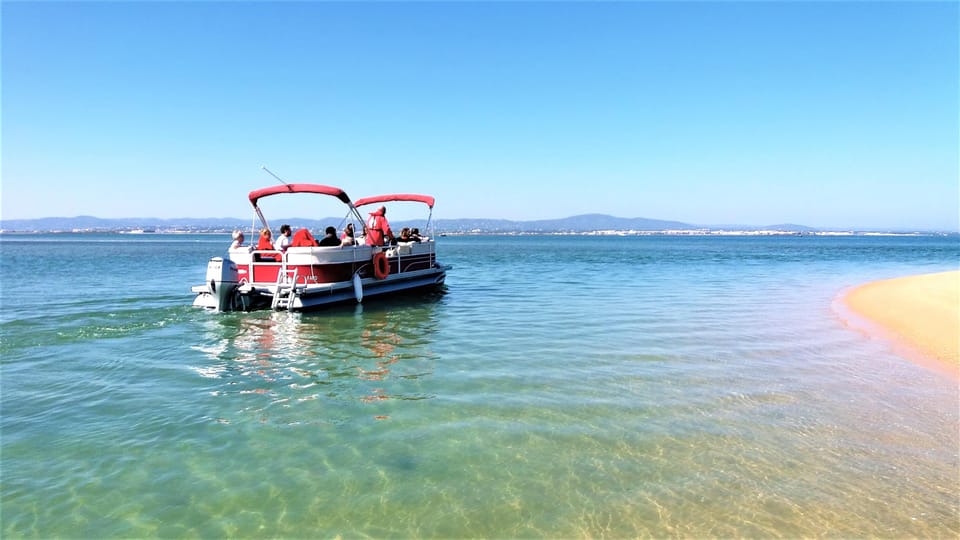
You board via a floating pontoon, and between the pontoon and the gunwale there’s a step whose height changes with the tide. At high tide it’s a few centimetres, at low tide considerably more. There is no ramp, and the boat moves.
This isn’t a guess about one particular operator, it’s simply how this jetty is built. Anyone wanting to reach the island with a wheelchair will need help getting across – and should choose the time by the water level, not by the timetable.
The One Way to the Sand Without a Boat
Praia do Barril is the only beach here you can reach without a crossing. From Pedras d’el Rei, a causeway crosses the lagoon, followed by a flat, paved kilometre across the salt marsh – no steps and no gradient, running alongside a narrow-gauge railway you can also ride.
Whether a wheelchair fits on this little train is a question for the staff on site; the carriages are open and have a step up. The path alongside is the more reliable option, and it’s easy to wheel along in dry weather.
At the end lies the anchor graveyard, and that’s where the sand begins. Wooden boardwalks cross the dune; how far they reach and where they end changes with the winter storms and the repairs made each spring.
For getting into the water itself, Portugal runs a state beach programme that designates participating beaches afresh each year, and at these, among other things, all-terrain beach wheelchairs are kept available. Which beaches in the Eastern Algarve are included in the current season is listed in that year’s official list – it changes from year to year, and that’s why we won’t name any here. The riverside tourist information office and the local council can tell you, and specifically for the summer you’re coming.
For which beach otherwise suits what, see Family Beaches Near Tavira.
The Tours, Type by Type – and What to Ask
These short descriptions omit the information; that establishes neither accessibility nor exclusion. But what you ask depends on the type of vehicle, and that much we do know:
Boat trips on the lagoon. Pontoon, step, a boat that moves, usually with no fixed spot to secure a wheelchair. Ask: how does the wheelchair get on board, how many pairs of hands are there, is there a toilet?
Tuk-tuk tours. A step up to get in, open sides, bench seats. Ask: can the wheelchair be carried along while you sit?
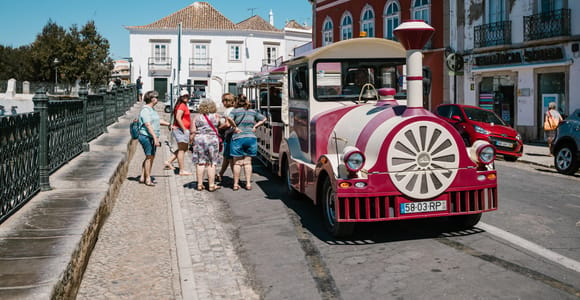
The tourist train, 45 minutes from €7 per person: a tour of the town. Confirm boarding and wheelchair transport before booking.
Jeep and off-road tours, two and a half to three hours. Ask about step height, boarding assistance and wheelchair space; the short descriptions do not support a comparison of step heights.
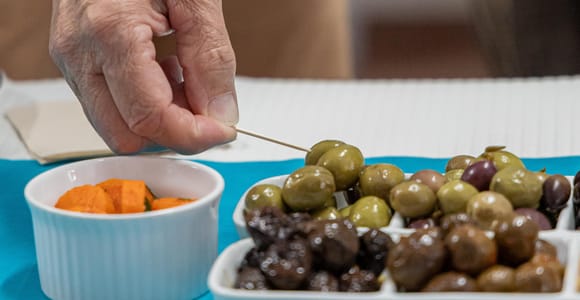
Tastings and tours on land, such as at the table-olive factory from €29. Here the questions are different and easier to answer: steps at the entrance, door width, toilet, seating.
Bike and e-bike tours are listed here for completeness and are ruled out.
How long each format lasts is covered in Half Day Versus Full Day Tours in Tavira.
How to Ask So the Answer Is Worth Something
“Is this accessible?” is the worst possible question. It invites a friendly yes, and the operator means something different by it than you do.
Better are questions that force a description, not a promise:
- How many steps are there, and how high is the first one?
- How wide is the narrowest point?
- How does a wheelchair get on board – who lifts, and what gets lifted?
- Does the wheelchair stay on board during the trip?
- Is there a toilet, and where?
And: get it in writing. An answer in the booking message is worth more at the jetty than a memory of a phone call.
When Tavira Is the Wrong Choice
Honesty stays honesty. Anyone wanting to reach the sea step-free and without help has a hard time on this coast: the sea lies behind a lagoon, and the one route on foot ends in sand. Anyone coming outside the bathing season will find no staff, no toilets and no lifeguards on the beaches.
That the area can still work anyway comes down to two things: the time of year, and how early you ask. Both are in your hands; the step at the pontoon isn’t.
What’s bookable, sorted by type: Ria Formosa Boat Tours, Tavira Old Town Tours, Food and Wine Tours and the full line-up at Things to Do in Tavira.