Best Time to Visit Tavira: the Water Is Warmest in September
Updated September 10, 2026 · 7 min read
Most best-time-to-visit tables for the Algarve answer a question that’s the wrong one for Tavira. They ask when it’s warm enough to swim.
Here, a lagoon lies between the town and the sea, and the beach is a boat ride away. So the season doesn’t hang on air temperature alone, but on a timetable – and that timetable looks different in February than it does in July.
The numbers for Tavira
| Month | Day | Night | Rainy days | Sunshine hours | Water |
|---|---|---|---|---|---|
| January | 15°C | 9°C | 7 | 5 | 15°C |
| February | 16°C | 10°C | 6 | 6 | 15°C |
| March | 18°C | 11°C | 8 | 7 | 15°C |
| April | 21°C | 14°C | 5 | 9 | 16°C |
| May | 22°C | 14°C | 3 | 11 | 17°C |
| June | 25°C | 18°C | 1 | 11 | 18°C |
| July | 28°C | 20°C | 0 | 13 | 19°C |
| August | 28°C | 20°C | 0 | 12 | 20°C |
| September | 26°C | 19°C | 2 | 9 | 21°C |
| October | 21°C | 16°C | 4 | 8 | 19°C |
| November | 19°C | 13°C | 7 | 5 | 17°C |
| December | 16°C | 10°C | 7 | 6 | 16°C |
Two figures in this table cut against the common assumption.
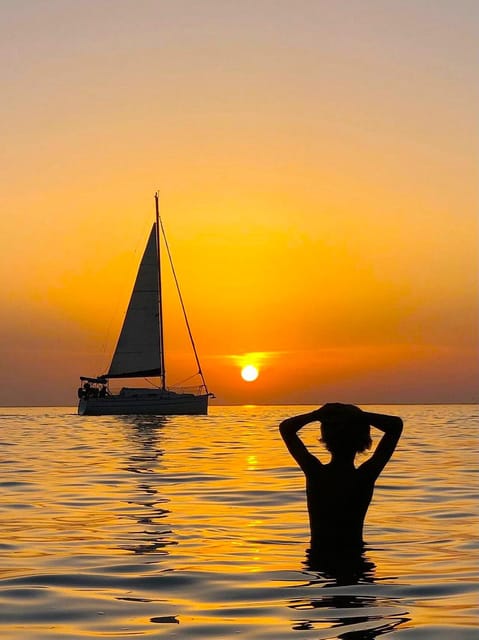
The sea is warmest in September, not August. 21°C against 20°C, and the air, at 26°C, is two degrees more comfortable than in high summer. The Atlantic lags the sun by a good two months – that’s the reason September is the underrated month here.
And the lagoon plays by its own rules. The figures above are for open water. In the channels behind the island beaches, and in the shallow gullies at low tide, the water has sat in the sun for half the day; it’s noticeably warmer than the surf side of the same island. Anyone coming with small children in June should swim on the lagoon side, not on the open beach.
What really sets the pace of the season: the ferries
Three jetties, three different calendars – that’s the piece of information a Tavira trip can turn on.
Quatro Águas runs to Ilha de Tavira all year round. In July and August, roughly every 30 minutes; in April and May, around eight departures a day; in winter, six or seven. The crossing itself takes under ten minutes.
The jetty in the middle of town, on Rua José Pires Padinha by the market, only operates from March to October. The trip there takes about twenty minutes and saves the two kilometres to Quatro Águas.
Santa Luzia to Terra Estreita runs exclusively from June to October – every 15 minutes in July and August, every 30 to 45 in the shoulder weeks.
The upshot: from November to February, exactly one of the three routes is running, with a handful of departures. In strong easterly winds, a crossing can be cancelled at short notice; the notice posted at the jetty is the only source that counts. The beach access points in detail are covered in Family-Friendly Beaches Near Tavira.
The route without a boat runs year-round: via Pedras d’el Rei to Praia do Barril.
July and August – and what they’re good for
No rainy days on average, thirteen hours of sunshine, 28°C. This is the most reliable swimming season, and it’s the only time the island has a bar, toilets and lifeguards.
The trade-off is that Tavira is packed these weeks, the queue at the jetty is long, and the midday heat cuts the day in two. Why the offering here is built around half-days is explained in Half-Day versus Full-Day Tours in Tavira.
Two things exist only now. The salt harvest in the salt pans runs from July to September; the Flor de Sal is skimmed by hand from the surface during still, hot weather. And the evening calendar is full: the Feira do Livro on Rua do Cais ran in 2026 from 17 July to 4 August, every evening from 8pm until after midnight, alongside a nightly stage programme on Praça da República.
September and October – the real answer
Warmest water, two rainy days, 26°C, and northern Europe’s school holidays are over. The ferries still run frequently, Santa Luzia until the end of October.
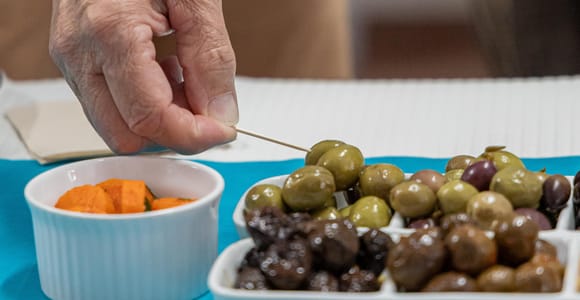
Early September brings something no other place on this coast has: the Feira da Dieta Mediterrânica in the old town, free to enter. Tavira is Portugal’s representative municipality for the Mediterranean Diet, inscribed on UNESCO’s Intangible Cultural Heritage list in 2013 – the festival is a consequence of that, not decoration. The twelfth edition ran from 3 to 6 September 2026.
October costs three degrees of air temperature and two of water temperature, and gives back a half-empty town in return.
March to May – for everything except swimming
Water temperatures of 15 to 17°C aren’t swimming water, even at 22°C air temperature. May has three rainy days and eleven hours of sunshine, and is the best walking month of the year.
For the salt pans, spring is one of the strong times: the migration route between Europe and Africa passes over the Ria Formosa, and in spring as in autumn, species that otherwise only pass through stop here to rest. What’s there to see is covered in What to See in the Eastern Algarve, bookable via Salt Pans and Flamingos.
November to February
The mildest winter months on mainland Europe, 15 to 19°C by day – and seven rainy days in both November and December, which here doesn’t mean constant rain, but showers between bright days.
Tavira stays open, because people live here and don’t just put up guests for the night. Some places shorten their hours, but the old town keeps running. The castle belongs almost to you alone at this time of year.
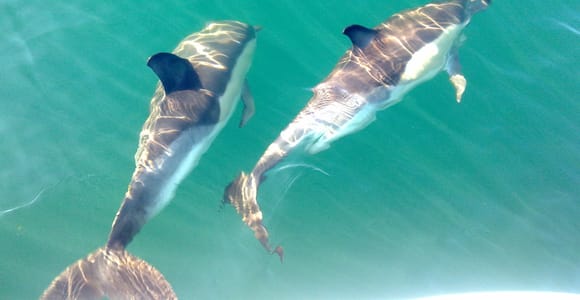
And the flamingos are now at their most numerous. They’re present in the lagoon year-round, but between November and March numbers are at their highest, because birds from northern and central Europe winter here. It’s the best time for the salt pans and the worst for the water – both at once.
What’s left to do indoors on a rainy day is covered in Tavira with Kids When It Rains.
When you shouldn’t come
If the beach is the point of the trip, not from November to March. Not because of the weather, but because of the timetable: a beach day that hangs on six departures and can be cancelled in the wind isn’t a beach day.
If you’re travelling with a toddler, not in August. Thirty degrees with no shade at the jetty, plus a wait – that’s the day everything falls apart. May, June or September are safer for this age, see Tavira with a Toddler.
If you only have a weekend, not in winter. With two days in February, a single shower can decide half the trip.
The catalogue displayed on this site contains 22 activities as of 10 September 2026; not all run year-round. The booking calendar for the specific tour tells you what actually happens in January – the season alone doesn’t. Anyone arriving without a hire car should also plan around bus and train times, which thin out in winter: Tavira Without a Car.
Sorted by type: Ria Formosa Boat Tours, Tavira Old Town Tours, Food and Wine Tours and the full range at Things to Do in Tavira.