Seasickness in Children: Which Boat Trip from Tavira Is the Calm One
Updated September 10, 2026 · 6 min read
Tavira has an advantage that most coastal towns don’t have: a large part of the boat trips don’t take place on the sea at all. Anyone who knows which trip goes where can halve the risk before they’ve even booked.
The One Difference That Matters
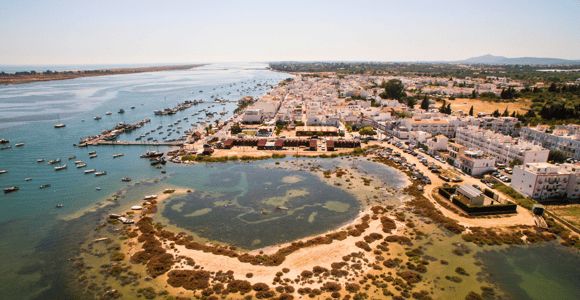
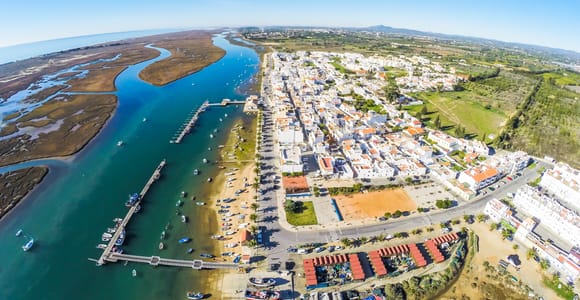
Off Tavira lies a lagoon, and in front of that lie sandbank islands. Inside these islands, the water is almost still: there is current, but no swell. A boat there doesn’t rock, it simply travels.
Outside, beyond the islands, it’s the open Atlantic. Same weather, same type of boat, a completely different day.
That’s the only difference that really matters for children. Boat size, seating, breakfast – all of that comes after.
Which Trip from Tavira Goes Where
Inside the lagoon: the boat trip through the fishing villages of Santa Luzia and Cabanas, from €34, around three hours. It stays behind the islands.
Mostly inside: the octopus route from Cabanas, from €35, four hours. It stops at Barra de Tavira, at Quatro Águas, at Santa Luzia for lunch, and at Terra Estreita – all places in sheltered water.
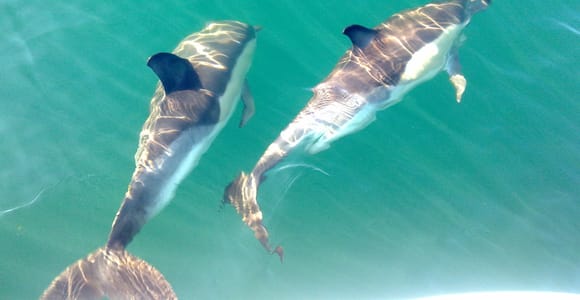
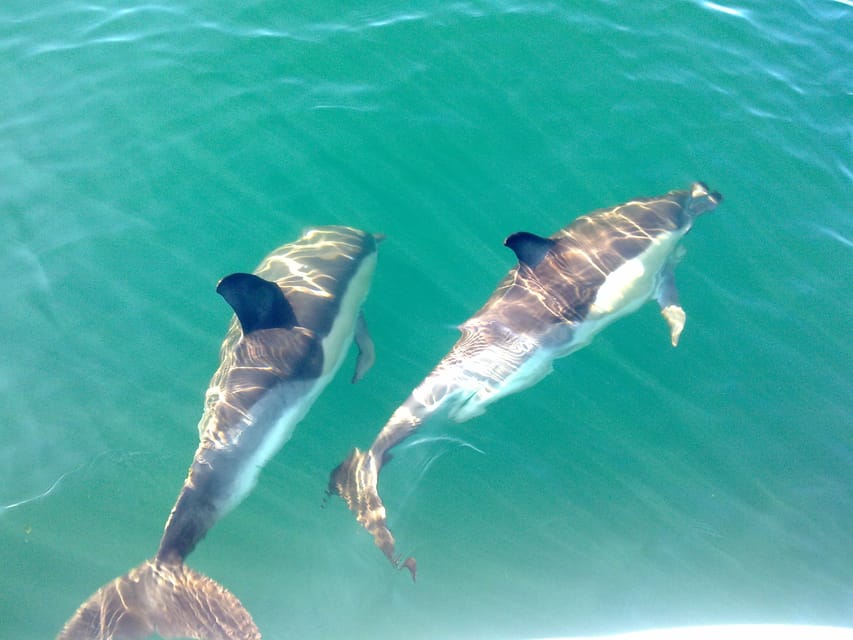
Outside: the dolphin watching trip from Cabanas, from €38, two and a half hours. Dolphins don’t live in the lagoon, so this boat heads out. Among the three trips compared here, its 3.6 out of 5 stars from 104 reviews is below the octopus route (3.9 from 88) and the fishing-village trip (4.8 from 151; catalogue dated 10 September 2026). These figures do not reveal the reasons for the ratings.
Anyone travelling with a child who is sensitive now has a clear order of preference – and it doesn’t even cost more.
The Ten Minutes at the Barra
When a boat leaves the lagoon, it does so through a gap between two sandbank islands. There, the lagoon’s current meets the waves from outside, and that’s exactly where it gets choppy – more so over a short stretch than further out.
That’s worth knowing, because it feels different from how it actually is: the first few minutes past the gap are the worst part, not the start of things getting worse. A child who is told this beforehand copes with it more easily than one who thinks it’s only going to carry on like this.
If the tide is running against the wind, it’s more pronounced there than usual. The skipper knows this in the morning, just by looking out.
Morning Is Calmer Than Afternoon
On the Algarve, the wind typically picks up as the day goes on – it almost always blows harder in the afternoon than in the morning, and with the wind comes the short, steep swell that causes nausea.
That’s why the first departure of the day is almost always the calmest. For small children, this is a stronger argument than any other, and it’s the reason morning slots fill up earlier in summer.
Where to Sit on Board
Three things that apply on every boat:
In the middle, not at the bow. The motion is greatest at the front; the middle moves the least. For children who find the bow exciting, this is the one point worth being strict about.
Outside, not in the cabin. Fresh air and a fixed view of the horizon are what helps. The cabin combines confined space, engine smell and no horizon.
No screens, no books. Looking down at something that’s moving with the boat is the most reliable way to trigger nausea. That applies to children even more than to adults.
What We Don’t Say
We don’t recommend any remedies. What helps against nausea, what’s suitable from which age, and what’s available in Portugal without a prescription is a question for the pharmacy – every town here has one, recognisable by the green cross – or for the paediatrician back home beforehand. Not the skipper, and not us.
Likewise: whether an empty or a full stomach is better is claimed by all sides, and it’s not information we’re able to give.
What to Ask Before Booking
The operators’ descriptions don’t answer this – you have to ask, and before booking, not at the jetty:
- Does the trip stay in the lagoon, or does it go out?
- Is there shade on board, and is there a toilet?
- Life jackets in children’s sizes – are they available, and in which sizes?
- How many guests are on board? A full boat can’t be changed.
- What happens if a child can’t go on partway through?
The last question is the most uncomfortable and the most important one. On a shared trip, a boat as a rule doesn’t turn back for a single guest – that’s not harshness, it’s the reason a trip costs €35 and not €500. Anyone who wants to rule that possibility out books privately and pays several times as much for it.
The remaining questions on age, duration and equipment are covered in Boat Trips with Kids: What Age.
When to Give It a Miss
If a child already gets sick in the car on winding roads, the likelihood is high out at sea – not certain, but high enough to choose the lagoon trip over the dolphin trip.
If it’s been blowing hard since the day before, that’s not a good day for a child’s first boat trip. And if the operator advises against it themselves, believe them: they have more to gain if you go.
The lagoon almost always works. If nothing is possible outside, something inside usually still is – and the fishing villages, the fish traps and the salt heaps are closer to a child’s world anyway than a dolphin that might or might not show up.
Which trip suits which age is covered in Tavira with Kids, Tavira with a Toddler and Tavira with School-Age Kids. Bookable trips by type: Ria Formosa Boat Tours, Salt Pans and Flamingos and Things to Do in Tavira.